
Federal Bureau of Prisons Releases
A person can leave BOP custody at sentence completion, through an authorized release process, or by transfer to another legal authority. The next step may be return to the community with a term of federal supervised release, movement to another sovereign, or immigration custody. Supervised release is a court-ordered period monitored in the community after imprisonment. It is not the same as remaining inside a BOP institution, and it is not proof that every obligation has ended.
The BOP Inmate Locator is the official public source for a sentenced federal prison record. A released record commonly gives a release date and wording that indicates release or no current BOP custody. Read that statement within its scope. Departure from BOP does not answer whether U.S. Probation supervision applies, whether another warrant or case exists, or whether ICE or a state agency accepted custody. A detainer, which is notice that another authority may seek custody, can lead to transfer rather than community release.
Hancock County JailTracker cannot verify a federal prison release. The county roster covers the sheriff's current custody population, while BOP covers the federal correctional system. A person may have appeared at the Hancock County Public Safety Complex during a different local case or custodial stage, but the agency that held the federal sentence record controls the federal release event.
Confirm a Federal BOP Release
Use a federal identifier when possible. The BOP locator accepts a BOP register number and can also search by DCDC, FBI, or INS number. A name search adds demographic filters. Names can be shared or entered in more than one form, so compare the register number, age, race, sex, and any status or date before relying on a result.
- Open the official BOP locator and select the number search when a federal identifier is known.
- Otherwise search by the person's full name and use the available age, race, and sex filters to narrow matches.
- Open or read the correct result and record the register number, release date, and exact location or status wording.
- Treat “Released” or “Not in BOP custody” as a statement about BOP only.
- Check the federal docket for the judgment, sentence, dismissal, or term of supervised release that explains the legal result.
- If another custodian is named, move to that agency's official locator or records office.
The Hancock County released-inmate search covers the broader custody map when it is not clear whether the person was a county detainee, MDOC prisoner, federal prisoner, or immigration detainee. Do not jump to BOP merely because a name is absent from the Hancock roster. First establish that the person entered the federal prison system.
Note: A federal pretrial detainee may be housed by contract and may not appear like a sentenced BOP prisoner.
BOP Locator Release Record Fields
The BOP locator is concise. It is designed to identify a federal prisoner and report core location or release data, not reproduce the complete court file. Use the register number to connect the locator result with federal records. Then compare the date with the judgment and docket rather than treating a single database row as the full legal history.
| Locator field | What it contributes |
|---|---|
| Name | Identifies the person, subject to spelling and shared-name checks. |
| Register number | Provides the strongest public key for the BOP record. |
| Age, race, and sex | Help distinguish people returned by a name search. |
| Release date | Reports the date associated with departure from BOP custody. |
| Location or status | States the BOP context, including released or out-of-custody wording where shown. |
BOP does not use the locator as a booking-photo source. It also does not display every court filing or supervision condition. When the locator date is disputed, the federal docket and an agency record request are the better routes for the underlying sentence and custody event.
Federal BOP Release Locator Screen
The official Federal Bureau of Prisons locator displays the search routes used for a federal release check. The captured source image documents the federal interface rather than a Hancock County roster.
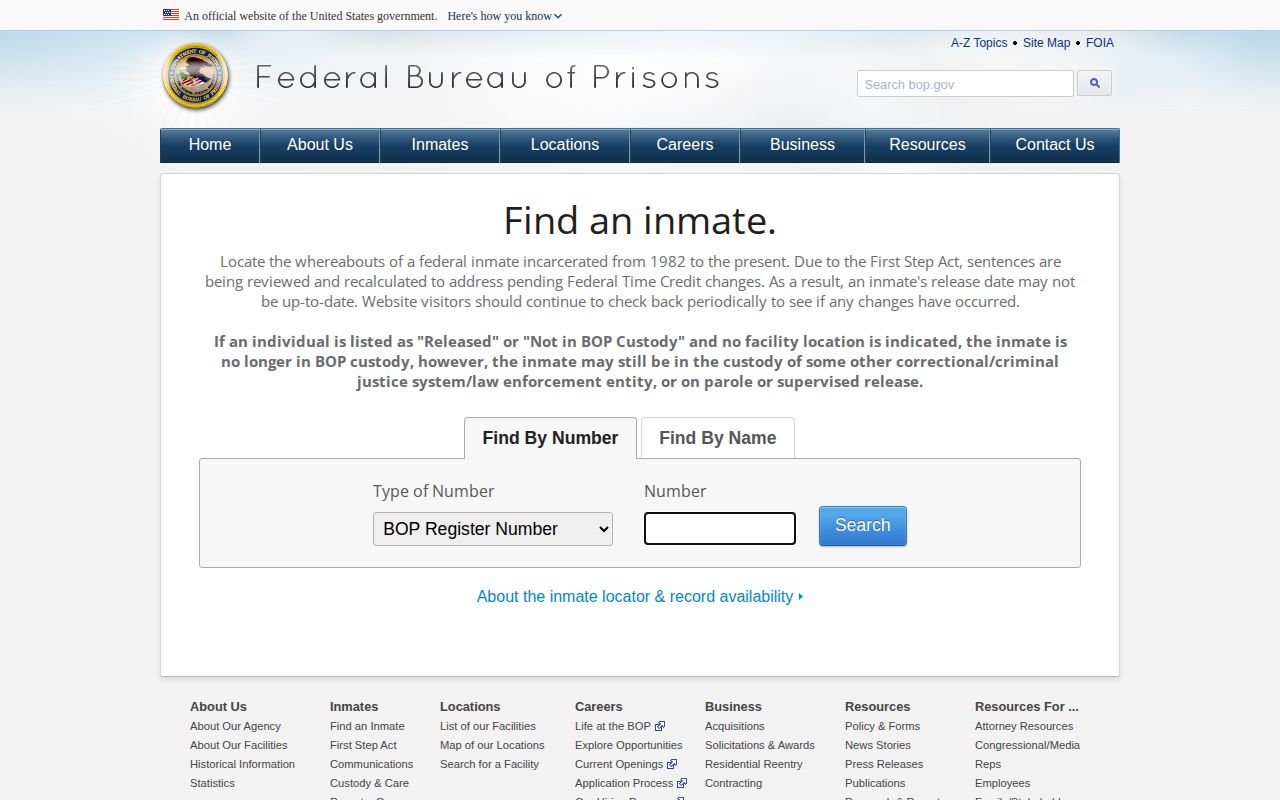
The screen helps choose the correct search method. It does not identify a release until the correct result returns an affirmative date or status. Record the query details and register number so the same federal record can be checked again or matched to the court docket.
Hancock Federal Release Record Paths
No BOP institution was confirmed within Hancock County. A person connected to Hancock may still pass through several systems. The HCSO current inmate lookup applies to county jail custody. The HCSO contact office can confirm whether a county event was a release or transfer. Neither source can certify a later release from federal prison.
Local court routing can help identify the sovereign. The Hancock County courts directory describes local justice and county channels, and the Hancock Circuit Clerk handles circuit files. A true federal prosecution belongs in the federal docket. Use the official PACER court-record route for the federal judgment and later orders.
| Last known event | Correct release source |
|---|---|
| Hancock County jail booking | HCSO roster, release transaction, and local court record |
| State sentence or MDOC transfer | MDOC inmate search and state records |
| Federal prison sentence | BOP locator and federal docket |
| Immigration transfer after custody | ICE Online Detainee Locator and the sending-agency record |
These paths should not be blended. A missing county result is not enough to search-report a federal release, and a past BOP date says nothing about a new county booking. Follow the identifiers and dates from one affirmative agency event to the next.
Note: Establish the sovereign and sentence before choosing BOP, since a local arrest alone does not create a federal prison record.
Federal BOP Release Records
The locator is the first public access channel. BOP's locator record notes explain that coverage principally concerns federal prisoners from 1982 onward and includes historical limits. Older records or unusual custodial paths may require archive or court research. A no-match is not a release record.
Federal record channels
BOP Inmate Locator
Search federal inmate and release data
BOP Locator Record Notes
Review coverage and historical limits
Federal Court Record
Find the judgment and docket through PACER
Ask for the record that answers the disputed fact. The locator may be enough to confirm a published BOP release date. The judgment explains the sentence and supervised-release term. Later docket entries can show modification, revocation, or dismissal. Another agency's records are needed when the person moved from BOP to a different custodian.
Historical scope affects the result. BOP says the public locator principally covers federal inmates from 1982 to the present, so an older sentence may require records beyond the live search. Even within that span, a spelling variation or missing identifier can obscure the right match. Recheck the register, DCDC, FBI, or INS number against the federal docket before concluding that no federal record exists. If the person was held before trial through the U.S. Marshals Service, the court and responsible custodial agency may explain an event that the sentenced-prison locator does not display as expected.
Federal Release and Supervised Release
Release from prison and release from all legal control are not the same. Federal supervised release follows imprisonment when ordered by the court. U.S. Probation, not the BOP locator, is the practical supervision channel. The docket supplies the duration and later orders. Do not infer that supervision ended merely because the BOP record carries a past release date.
- BOP release
- Departure from Federal Bureau of Prisons custody on the reported date.
- Supervised release
- A court-ordered period in the community after federal imprisonment.
- Transfer
- Movement to another custodian rather than entry into the community.
- Federal docket
- The court history containing judgment, sentence, and later orders.
- Detainer
- A request or notice that another authority may seek custody.
The U.S. Marshals Service may hold or transport federal prisoners, including through contracts, but it does not provide a public historical release locator equivalent to BOP. For immigration custody after a federal event, use the ICE detainee locator and verify the transfer with the sending agency. Each positive record should state which custodian it addresses and which questions remain open.
A federal release inquiry is strongest when the dates form a clear chain. The judgment supplies the sentence, the BOP result supplies the reported prison release date, and the later docket can show supervision or revocation activity. If a Hancock County booking occurs after that date, it is a new county event and should be checked through HCSO. Keeping the events separate prevents an old federal release record from being mistaken for a person's current status.