
Hancock Projected and Actual Release
A projected date is a calculation made before the release event. Mississippi Department of Corrections uses the exact public field name Tentative Release Date. A court sentence may also have a maximum end date. Neither one proves that the person has walked out. Actual release is the custody transaction that records when and how the person left and whether another agency received custody.
A pretrial detainee at the Hancock County Public Safety Complex does not have a sentence-based projected release date. The release may depend on bond, dismissal, a court order, case disposition, or a transfer. For a person serving a county sentence, HCSO and the sentencing court hold the key records. For a state prisoner, including an MDOC prisoner housed at Hancock, MDOC calculation rules apply because the legal custodian is the state.
That distinction also prevents a transfer from being called release to the community. Someone may leave the Hancock roster for MDOC or ICE. The roster change is real, but the legal custody may continue elsewhere.
Find Hancock Projected Release Dates
Start with custody type. The official MDOC inmate search accepts first name, last name, or MDOC ID. ID is the safest way to distinguish similar names. Open the detail record. The result template can show Entry Date, Location, Unit, Location Change Date, sentence information, and Tentative Release Date. A field may be blank. A blank tentative date does not mean the person has already been discharged.
A county-only detainee who never entered state custody may have no MDOC record. In that case, use the Hancock court and jail records. Ask for the sentencing order, jail-credit calculation, time-served authorization, and the actual release transaction. Keep legal authorization and physical gate time separate.
- Confirm whether HCSO, MDOC, BOP, or another agency is the legal custodian.
- For an MDOC sentence, search by MDOC ID and open the full detail rather than relying on the result row.
- Read Tentative Release Date with Location, Unit, sentence dates, and Location Change Date. Do not interpret one field alone.
- For a Hancock jail sentence, request the court order and HCSO time calculation. No official local good-time formula was found online.
- Near the expected event, use agency notice and obtain the actual release record to confirm what occurred.
The official MDOC offender search shows the current name and identifier fields used for a state release-date lookup.
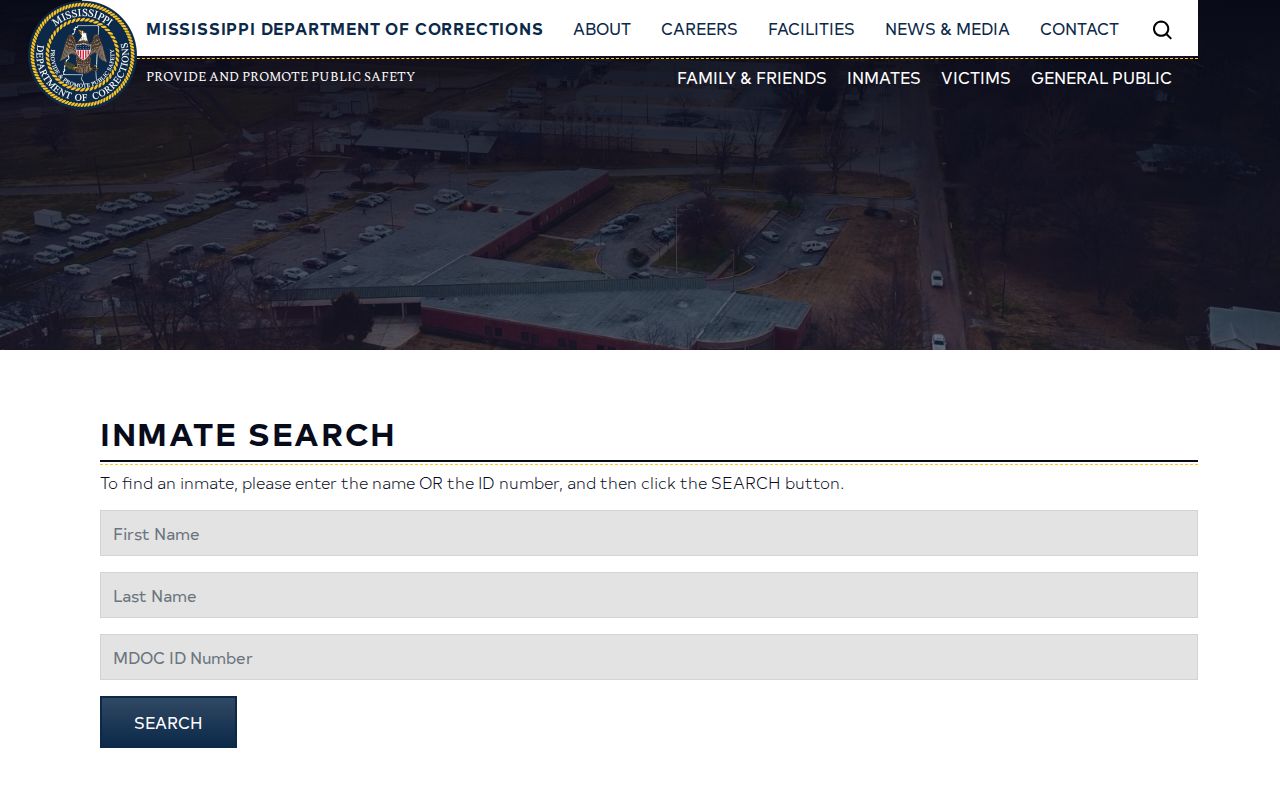
The search covers state correctional records, not every person booked only into the Hancock County jail.
Note: Use a court case number and MDOC ID when available because matching by name alone can select the wrong record.
Three Mississippi Release Calculations
Mississippi publishes three related calculations: an ERS date, a Tentative Release Date, and a maximum release date. ERS means Earned Release Supervision. It allows physical release from an institution under a statutory framework while MDOC keeps jurisdiction. The tentative date reflects current legal and administrative calculations. The maximum date reflects the outside sentence computation. These dates can differ because they answer different questions.
MDOC states that an ERS date does not automatically produce physical release. Classification, behavior, statutory eligibility, and an approved residence can intervene. Near the date, MDOC may investigate the proposed residence. A failed plan or lost credit can delay the move. A person on ERS may be outside a prison yet remain in the state offender system.
The public MDOC ERS example demonstrates a record with a noninstitutional ERS location, sentence data, and a Tentative Release Date.
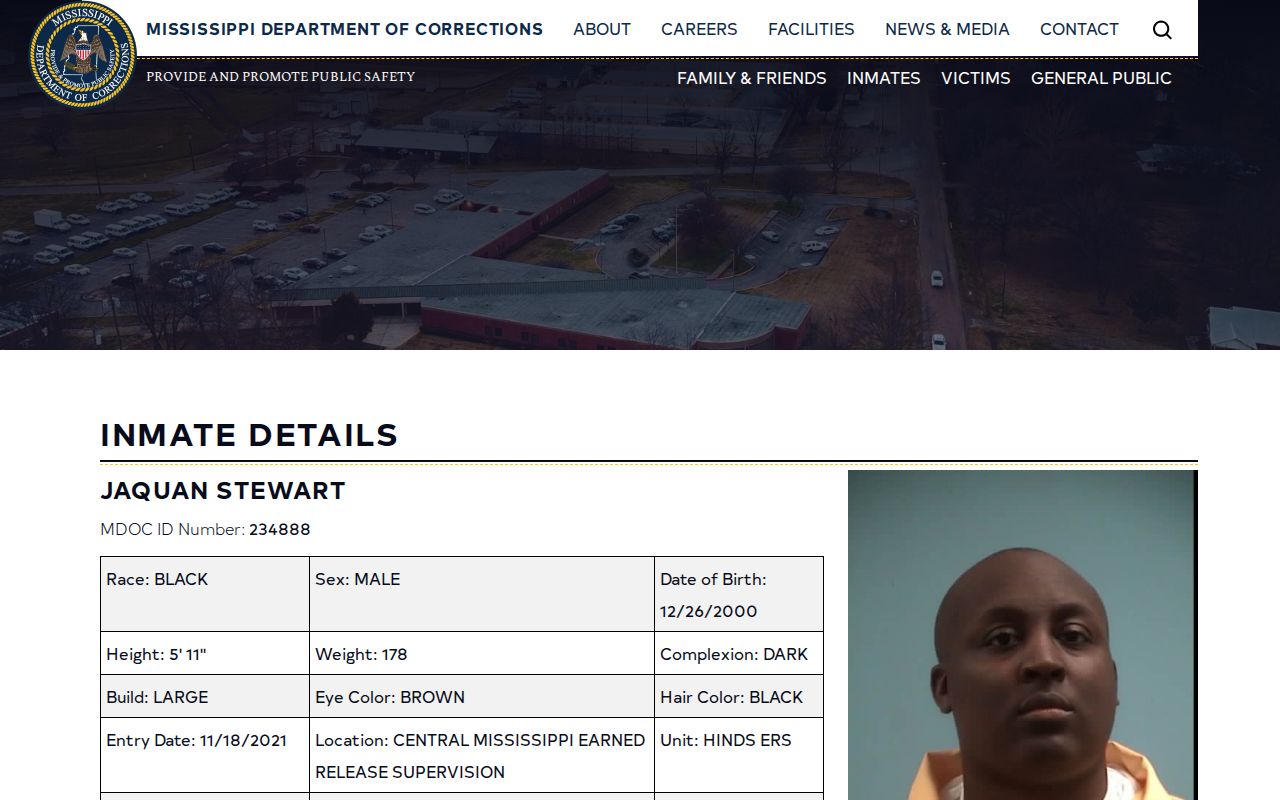
The example shows why physical release under supervision is not the same as final discharge from MDOC jurisdiction.
Hancock Release Dates and Earned Time
Mississippi Code § 47-5-138 is the central earned-time source. The MDOC-hosted law explains that covered sentences after June 30, 1995 may earn 4.5 days for each 30 days served for good conduct and performance, with a standard ceiling of 15 percent of the term. That calculation produced the common phrase “serve 85 percent.” It is not a promise that every state prisoner leaves at exactly that point.
Current amendments, offense exclusions, sentence structure, age and nonviolent provisions, forfeiture, and other laws can change the computation. Earned time can be lost for serious violations. MDOC also identifies examples that can block ERS, including life sentences, habitual status, certain sex crimes, escape or attempted escape from an adult prison, and other statutory limits. The current law must be applied to the actual offense and sentence.
Parole eligibility is calculated separately under Mississippi Code § 47-7-3. Parole is a discretionary Board decision, while ERS is not a Board grant. A parole eligibility date can differ from both the Tentative Release Date and the ERS date. Review the current code through the Mississippi Legislature code repository and the agency's hosted earned-time text.
No official Hancock County good-time policy or weekend-release rule was located in the sheriff pages or inmate handbook. Do not apply the state 85-percent framework to a county-only sentence without confirming legal custody and the local calculation.
Hancock Jail Release Date Records
A person held before trial at the Hancock complex may leave after bond, recognizance, dismissal, or another court action. Those paths do not begin with an MDOC sentence computation. The court record supplies the legal authority, while the jail transaction supplies the time and disposition of the physical exit. One can precede the other because staff may still need to check holds, process property, and complete custody records.
For a local sentence, ask the sentencing court for the judgment, jail-credit or time-served decision, and any amended order. Ask HCSO for the corresponding release authorization and actual release date and time. If the event was a transfer, request the destination or receiving agency. This method also helps when a person is gone from the current JailTracker roster, which does not publish a historical release archive or fixed retention period.
HCSO publishes its records contact at 8450 Highway 90, Bay St. Louis, MS 39520, phone 228-466-6900, fax 228-255-8246, and so2@co.hancock.ms.us. Confirm the records custodian and delivery method before sending identity details. The sheriff FAQ's $5 report statement was not verified as the charge for a release-date calculation. Ask for an itemized estimate.
Hancock Release Dates by Custodian
The Hancock Public Safety Complex can hold people with different legal custodians. County detainees, housed MDOC prisoners, and immigration detainees have been documented there. The same move through the facility door can therefore mean release on bond, return to state custody, transport to another jail, or transfer to ICE. The correct release-date source follows legal custody, not the building alone.
Use HCSO and the local court for a county-only release. Use MDOC for a state sentence, Tentative Release Date, ERS calculation, parole status, and final discharge record. A federal sentenced prisoner belongs in the BOP locator, while an immigration transfer belongs in ICE's detainee locator. A past BOP release date proves departure from BOP custody, not that no other authority held the person.
Save the identifier and source agency from each result. If the person leaves one system, ask whether another agency received custody. This prevents the common error of reading a disappearance as an actual Hancock community release.
Why Hancock Release Dates Change
A date can move for legal, credit, conduct, or administrative reasons. The public result rarely tells the full story. Ask MDOC Records or the Hancock court for the calculation or order instead of assigning a cause from a changed screen. Concurrent sentences run together, while consecutive sentences run one after another, and a correction to that structure can materially change the estimate.
| Factor | Possible effect | Record to verify |
|---|---|---|
| Jail credit or amended sentence | Moves the computed term | Sentencing or amended court order |
| Earned-time gain or forfeiture | Advances or delays an MDOC date | MDOC time computation |
| Classification or discipline | Can affect credit or release eligibility | Available MDOC decision record |
| Detainer or agency hold | May cause transfer instead of community release | Release transaction and receiving-agency record |
| Residence plan | Can delay ERS placement | MDOC status and approved plan |
| Parole action | Grant, denial, or revocation changes the path | Parole Board action |
| Data correction | Changes the displayed date without a new sentence | Corrected source record |
A detainer is a request or hold from another authority. It can mean that a person leaves one facility in custody rather than going home. This is important at Hancock because the complex has housed county, MDOC, and immigration populations.
Note: A changed online date does not identify the cause; obtain the calculation, Board action, hold, or court order.
Confirm Hancock Actual Release Dates
As the tentative date approaches, compare the state record with a specific-person VINE notice where the agency participates. A VINE alert can report an agency event, but it is not a certified release record. An alert for transfer does not prove release into the community. The resolved VINELink Inmate Search explains how to choose the correct person and register for an offered event.
For a county release, ask HCSO whether the person was physically released, when the transaction occurred, what disposition authorized it, and which agency received custody if it was a transfer. For a state date, MDOC Records publishes P.O. Box 24388, Jackson, MS 39225, 601-933-2889, and MDOCRecordsDepartment@mdoc.state.ms.us for questions about time, jail credit, and eligibility dates.
A document request goes through MDOC GovQA. Ask narrowly for the sentence and credit computation, Tentative Release Date basis, status, release or discharge date, and authority. The MDOC public-record policy says telephone requests are not accepted. It also describes written response and production periods, possible copying and labor costs, and advance payment of an estimate.
MDOC's published policy lists inspection during working-day office hours, a written response within seven working days, and production generally within fourteen working days after request or payment unless more time is needed. It lists copying at 15 cents per page, labor beyond the first hour at the rate of the lowest-qualified employee, possible technology or vendor cost, postage, and advance payment of the estimated amount. Those terms apply to a records request, not to the time needed to answer every sentence question.
Request the smallest useful set of records. A calculation sheet, relevant order, location change, and release or discharge entry can answer the date question without seeking confidential institutional or field-officer material. If the agency withholds part of a record, ask for redaction of exempt fields and the written statutory basis for the rest.