
Hancock 72-Hour Release Feed Status
The Hancock County Sheriff's Office inmate-lookup page embeds a current JailTracker roster. Neither that wrapper nor the direct interface displayed a separate recent-releases link, 72-hour menu, or verified date-range parameter during research. The agency also published no online archive length or update cadence. As a result, there is no honest public URL that returns every Hancock County jail release from the past three days.
A three-day list can still be requested from the source. The useful record is not a set of names inferred from roster changes. It is a series of actual release transactions tied to a start date and end date. Each event should show who left county custody, when the transaction occurred, what legal authority applied, and whether the person entered the community or went to a receiving agency. That last field prevents a transfer from being reported as freedom from custody.
Important: Hancock County publishes a live custody view, not a verified public 72-hour history. Build the window from affirmative records.
The negative finding is limited to the public interface reviewed July 26, 2026. HCSO still creates custody transactions as part of jail operations, so the absence of a web feed does not mean the underlying three-day records do not exist.
Build a Hancock 72-Hour Release Window
Write down the exact beginning and ending timestamps before contacting the jail. “The last three days” can shift while staff handles the request, while a fixed range does not. For a weekend review, state each calendar date and ask whether the time shown is the legal authorization time or the actual physical-release transaction. The two can differ because staff may still complete checks, property steps, transport coordination, or another hold.
- Check the official current roster to see whether a known person still appears in Hancock County custody.
- Call the Hancock County Public Safety Complex at 228-466-6900 and give the exact three-day range.
- Ask for the recorded release date and time, release disposition, and destination or receiving custodian for each relevant event.
- Use the arresting agency and case number to locate the bond, dismissal, sentencing, or other court order.
- Check Mississippi VINELink for a matching release or transfer event when the person and agency participate.
- Submit a focused written public-records request if the phone call cannot supply the existing event fields.
HCSO lists its general office schedule on the sheriff FAQ. A call after those hours may reach a different channel, so distinguish an immediate status question from a record request that the appropriate office will process. The FAQ's report price is not a confirmed fee for a release dataset. Ask for an estimate based on the exact range and format.
Note: A fixed start and end time helps HCSO search one defined period instead of an ever-changing “last three days.”
Hancock 72-Hour Release Record Fields
Because no public Hancock County 72-hour feed was verified, the table below describes the release fields to request, not fields promised on a website. The booking number ties each transaction to one custody cycle. The legal release type explains authority. Destination data shows whether the person left the justice system's physical custody or simply moved from HCSO to another custodian.
| Requested field | Why it matters in a three-day review |
|---|---|
| Name and identifier | Separates people with similar names and supports later verification. |
| Booking number and booking date | Connects release to the correct Hancock County detention period. |
| Actual release timestamp | Places the event inside or outside the defined 72-hour range. |
| Release authority or type | Distinguishes bond, time served, dismissal, probation, sentence end, and other grounds. |
| Destination or receiving agency | Separates a community exit from an MDOC, ICE, federal, hospital, or jail transfer. |
| Charge and court case number | Points to the durable order and disposition trail. |
The online roster may show identity, booking, charge, bond, and photo data for current results, depending on the active agency settings. It is not a researched historical-release record. If the request concerns several events, ask HCSO whether an existing report already covers the fixed range. Public-record law does not require the agency to create a new analysis that it does not keep.
Hancock Weekend Release Record Checks
A 72-hour span is most useful when normal office hours interrupt access to records. A Friday evening event may not be easy to verify through the records office until the next workday. Holiday closures can create the same gap. The custody transaction still has its own timestamp, but downstream roster, VINE, and court systems may post on different schedules. None of the reviewed HCSO pages promises that every system updates at once.
Use the live roster for present custody only. If a person remains listed after a reported release order, call the jail because processing or another hold may still be active. If the name disappears, preserve the time of the search and ask for the transaction. A weekend disappearance can reflect community release, movement to MDOC, transport to ICE, a transfer to another county, a data correction, or a delayed system update.
The court record adds legal context. Hancock sheriff misdemeanor matters and felony preliminary matters begin in Justice Court, city cases route to the relevant municipal court, and an indicted felony reaches Circuit Court. A docket date can show when an order was entered, but the jail record is still needed for the exact physical departure.
Note: The 72-hour period does not guarantee a matching publication cycle because Hancock County posts no release-feed cadence.
Hancock 72-Hour Roster Data Gaps
The official sheriff wrapper calls the service only “Inmate Lookup.” The direct Hancock JailTracker shell could return an invalid-facility condition during the research check. Those facts are a distinctive local warning. A person-by-person records path is more dependable than pretending the roster can export a three-day history.
The official current-custody interface is shown below. The source is the county-specific JailTracker endpoint, which does not label the screen as a 72-hour release report.
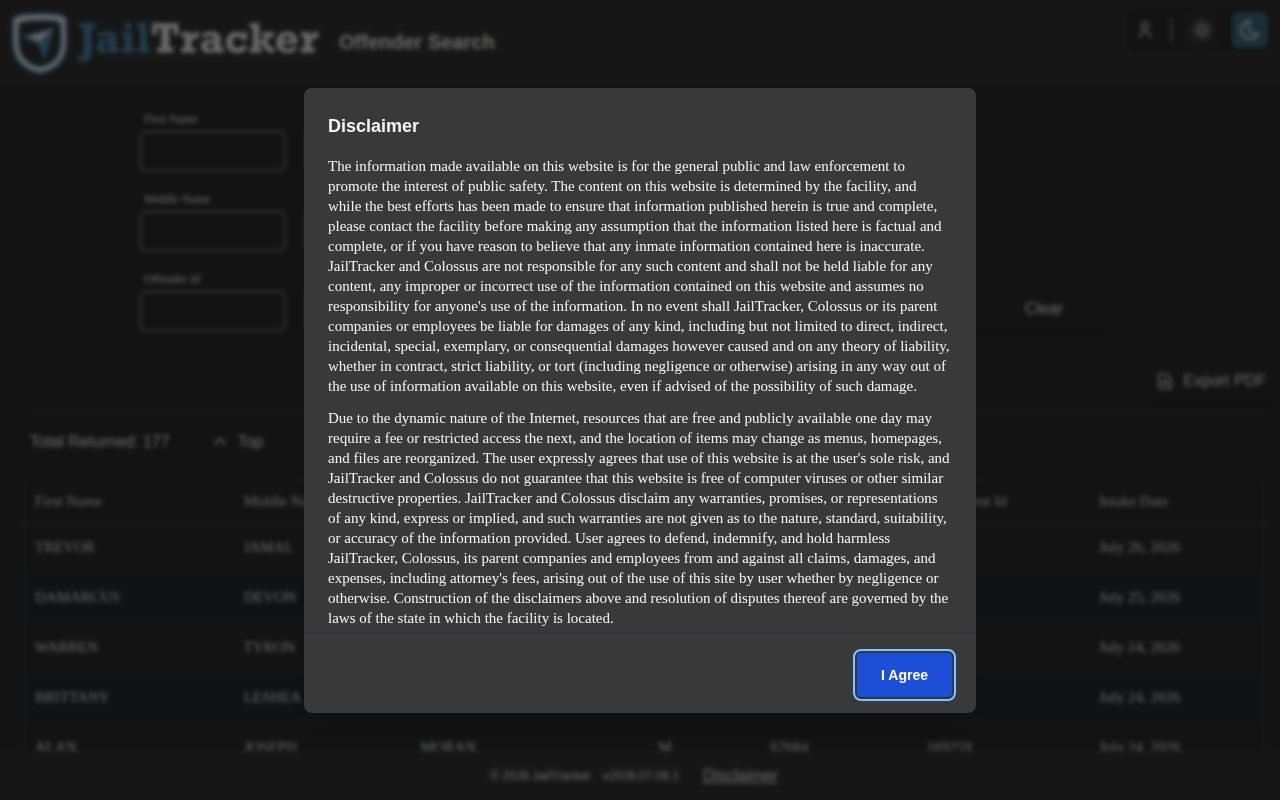
This image documents the correct official roster context. It cannot show who vanished from the list across three days, and no unverified URL parameter should be added to make it do so. When access fails, call HCSO, check VINELink, and retain the court case details for the written request.
Hancock 72-Hour Court Release Trail
A court order and a jail release transaction answer related but different questions. The order can show bond, recognizance, dismissal, sentence credit, probation, revocation, or another legal result. The transaction shows when HCSO custody changed and may name the destination. Combining them is especially useful after the public roster has moved on.
The Hancock County courts directory explains local jurisdiction, while the Circuit Clerk is the route for circuit criminal files. Municipal police matters may stay in Bay St. Louis or Waveland Municipal Court, and sheriff cases may begin in Justice Court. Ask for the docket and the specific order rather than a broad case summary.
- Release authority
- The legal order or rule permitting custody to end.
- Actual release
- The physical transaction that ends or transfers jail custody.
- Transfer
- A move to another custodian, not a release into the community.
- Disposition
- The court's recorded outcome for a charge or case stage.
For one recent day instead of a weekend span, the Hancock Jail Releases: 24 Hours method narrows the call and emphasizes same-day processing lag. Both routes require a positive event. Neither treats silence from a live roster as proof.
Match Hancock Releases to Custody
The Hancock County Public Safety Complex has housed more than one legal population. County detainees, MDOC prisoners, and contract ICE detainees can share the building while remaining subject to different records. That mixed-custody fact changes the next lookup. A county release report belongs with HCSO and the court. A transfer into state custody belongs in the MDOC inmate search. Immigration detention belongs in ICE's locator, while a federal prison sentence belongs in BOP.
| Hancock event | Follow-up channel |
|---|---|
| Community release on bond or recognizance | HCSO transaction and the issuing court order |
| County sentence completed | HCSO release record and sentencing file |
| Transfer to MDOC | MDOC inmate search and state records |
| Transfer to ICE | HCSO receiving-agency field and ICE ODLS |
| Unresolved no-match | HCSO call, VINELink, court docket, and focused records request |
The broader Hancock County released-inmate search is useful when the last custodian is unknown. For a true 72-hour county list, keep the request tied to HCSO's own release transactions. This avoids mixing a county jail exit with a state discharge, federal release, or immigration move that follows a different record path.