
Mississippi Corrections Release Paths
The Mississippi Department of Corrections is a statewide prison and community-supervision system. It is not the Hancock County jail. A sentenced state prisoner may be discharged at the end of the state term, released on parole, placed on Earned Release Supervision, or moved to another MDOC or community-corrections location. A person can be physically outside a prison while MDOC still has legal jurisdiction.
The Hancock County Public Safety Complex has housed MDOC prisoners, but the building does not change the legal custodian. If HCSO transfers a county detainee to MDOC, that event is not community release. It is a handoff into state custody. The MDOC offender record, state release transaction, and receiving location are the correct sources after the transfer.
| Movement | Legal meaning | Confirm through |
|---|---|---|
| County jail to MDOC | Transfer into state custody | HCSO release disposition and MDOC location |
| Prison to ERS | Physical release under continued MDOC jurisdiction | MDOC offender detail and Records |
| Prison to parole | Conditional release after Board action | Board action, MDOC, and field office |
| Final state discharge | End of the state correctional term | MDOC discharge record |
Confirm Mississippi Corrections Releases
The official MDOC inmate search accepts first name, last name, or MDOC ID. An ID search is the safest route when names are shared. Open the full detail. The current template can show a photograph, identity data, Entry Date, Location, Unit, Location Change Date, sentence count and length, offense, county of conviction, sentence date, and Tentative Release Date. Fields can be blank.
Use a positive result literally. An ERS location means the person may be out of an institution but remains under state jurisdiction. A blank Tentative Release Date does not prove discharge. The live search was not verified to preserve every fully discharged record forever or to expose a final “Released” label in all cases.
- Confirm that the person has an MDOC number or a state sentence.
- Search by MDOC ID when possible and open the full detail record.
- Compare Location, Unit, Location Change Date, sentence fields, and Tentative Release Date.
- For parole, compare the offender record with the Board action and local reporting office.
- For final discharge, request the state release or discharge record from MDOC.
The official MDOC search form shows the current state lookup fields.
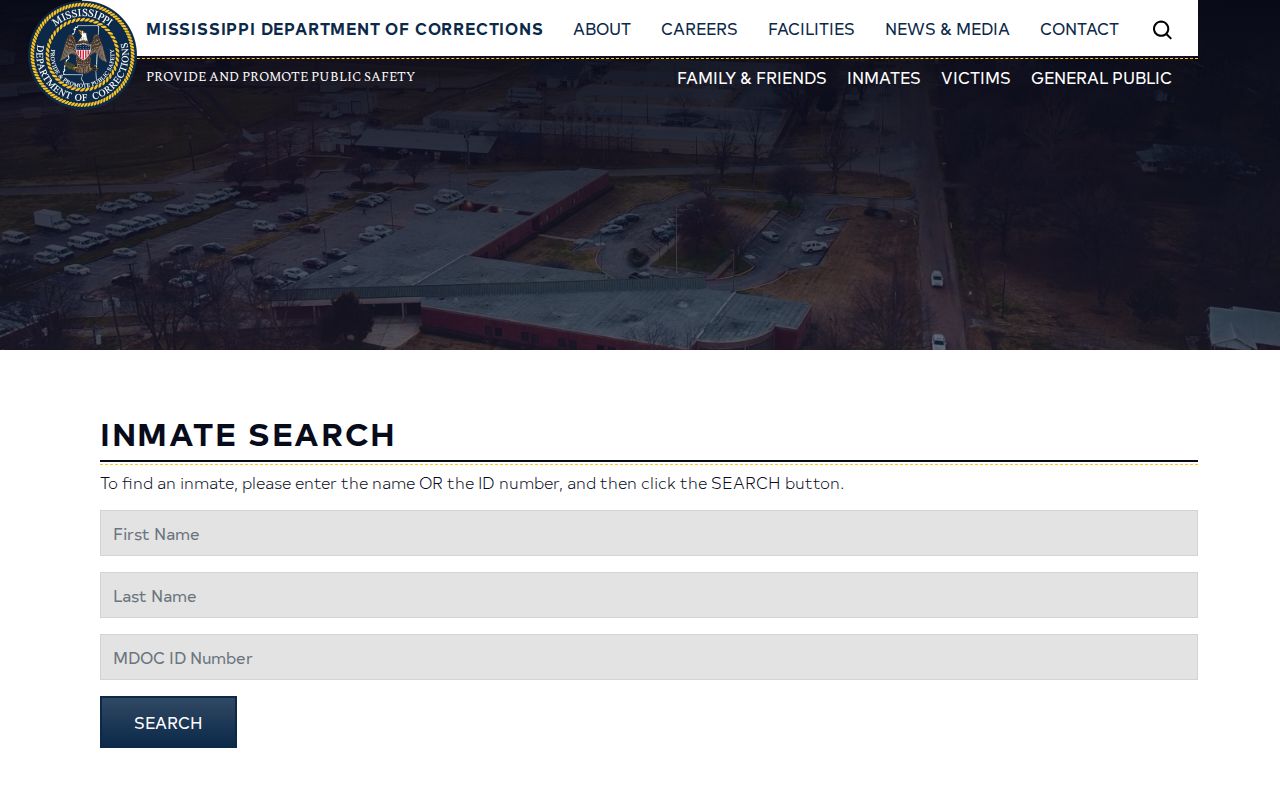
The form is for state correctional records and does not cover a county-only detainee who never entered MDOC.
Mississippi Tentative Release Dates
MDOC uses the exact public field name Tentative Release Date. It also describes an ERS date and a maximum release date. These are related calculations, not interchangeable facts. The maximum date reflects the outside term. The tentative and ERS dates reflect current legal eligibility, credits, behavior, classification, and administrative conditions. Physical release can still depend on a valid residence plan and current authority.
Mississippi Code § 47-5-138 is the central earned-time source. For covered sentences, the hosted statutory text describes 4.5 days of credit for each 30 days served for good conduct and performance, with a standard limit of 15 percent of the term. That is the source of the “serve 85 percent” shorthand. It is not a guarantee for every sentence. Offense exclusions, sentence dates, habitual status, forfeiture, and other laws can change the result.
Parole eligibility under § 47-7-3 is separate. Parole is discretionary Board action, while ERS is a statutory MDOC mechanism. A parole eligibility date can differ from the ERS date, Tentative Release Date, and maximum date. The Hancock County projected release page explains those computations without treating an estimate as actual release.
Mississippi ERS Is Not Discharge
Earned Release Supervision is physical release from an institution before final sentence expiration while MDOC retains jurisdiction. The public offender record can still show an MDOC location, unit, sentence data, photograph, Location Change Date, and Tentative Release Date. That combination is evidence of continued state authority, not a completed discharge.
MDOC states that an ERS date does not automatically produce release. Classification and conduct matter. A proposed residence may be investigated as the date nears. A failed plan, a legal exclusion, lost credit, or a new hold can delay the move. An ERS person also remains subject to the applicable supervision terms until the state term ends.
The public MDOC ERS example shows a noninstitutional ERS location alongside state dates and sentence fields.
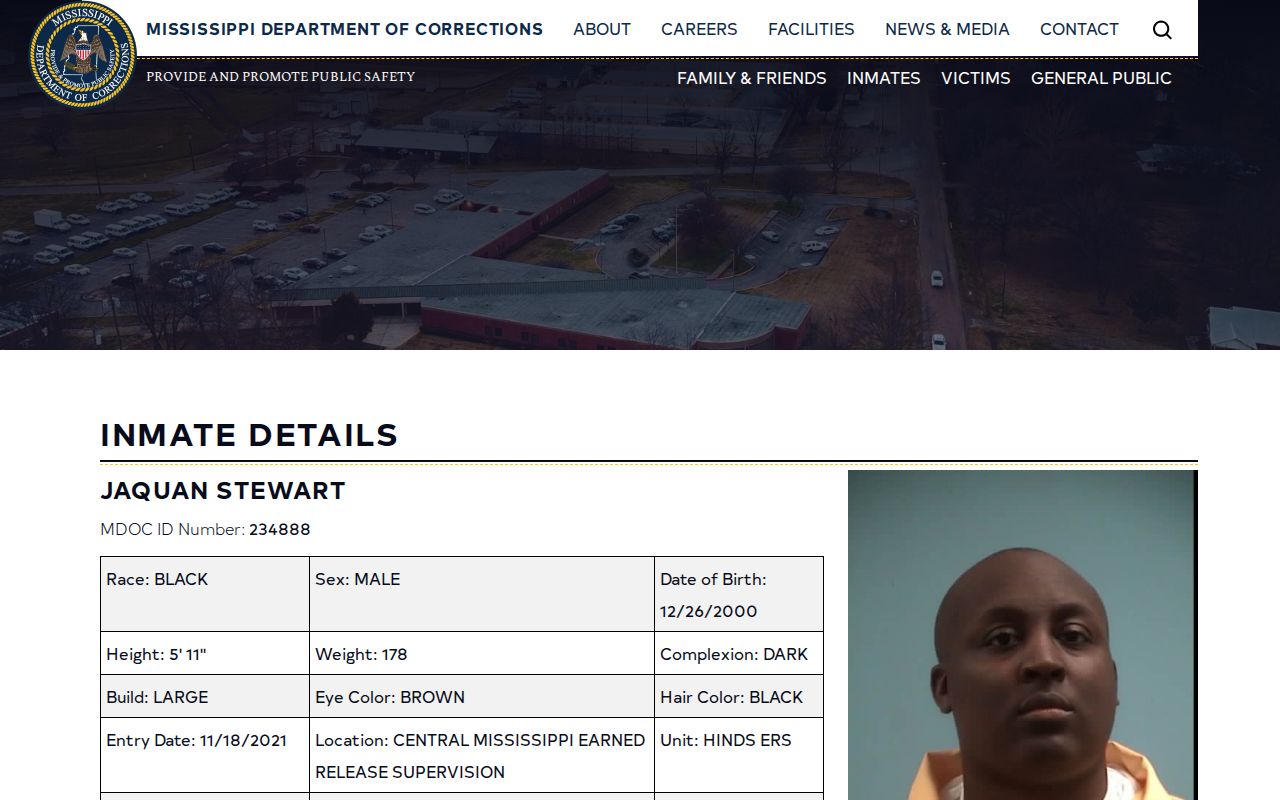
The example demonstrates why “outside prison” and “fully discharged” are different conclusions.
- Tentative Release Date
- MDOC's current estimate, subject to legal and administrative change.
- ERS
- Physical release under continued MDOC jurisdiction.
- Parole
- Conditional release granted by the State Parole Board.
- Discharge
- The formal end of the state correctional term.
Mississippi Corrections Records Contact
MDOC Records publishes P.O. Box 24388, Jackson, MS 39225, phone 601-933-2889, and MDOCRecordsDepartment@mdoc.state.ms.us for questions about time, jail credit, and eligibility dates. A question to Records is not the same as a public-record request. Use the agency's GovQA route when an inspectable or copyable document is needed.
MDOC Public Records Officer
301 North Lamar Street
Jackson, MS 39201
601-359-5600
Inspection hours: working days, 8 a.m. to 5 p.m.
The published policy says telephone requests are not accepted. It describes a written response within seven working days and production generally within fourteen working days after request or payment unless more time is needed. Listed costs include 15 cents per page, labor beyond the first hour at the rate of the lowest-qualified employee, possible vendor or technology cost, postage, and advance payment of an estimate.
Ask narrowly for the nonexempt release or discharge date, authority or type, institution or location change, sentence and credit computation, and available offender photograph. Field-officer records, victim information, investigative records, and some institutional information can be exempt. Request redaction of protected parts and production of the rest.
Hancock and State Custody
No MDOC prison campus was confirmed in Hancock County. The system serves Hancock cases through statewide institutions and Community Corrections. The local jail roster cannot verify state release, and the state search cannot prove release of someone who only bonded out of the county jail. Establish the custody type before choosing a portal.
If a Hancock release record identifies MDOC as the receiving agency, save the booking number, MDOC ID, transfer date, and destination. Search the state detail and ask MDOC Records when the public screen does not answer final status. If the state record instead shows community supervision, use the local Hancock office for reporting-office verification.
The Hancock County released inmate search covers the full path from local custody to state, court, VINE, federal, or immigration records. Expand the search only when an affirmative record identifies the next legal custodian.
Note: The statewide offender search and the Hancock JailTracker record cover different populations and must not be substituted for one another.
MDOC Prisoners Housed in Hancock
The Hancock sheriff's visitation page identifies designated sections for MDOC prisoners at the county complex. That local fact does not turn the statewide system into a county jail or make JailTracker the final source for a state sentence. One building can contain legally different populations. The agency with custody controls the release rules, date calculation, records path, and destination.
When a person leaves a Hancock detention section, ask whether MDOC retained custody, moved the person to another institution, or authorized community supervision. Pair the HCSO movement record with the MDOC Location and Location Change Date. Only the state release or discharge record can resolve final MDOC status.
Mississippi Parole Release Records
The Mississippi State Parole Board grants, denies, and revokes parole. MDOC calculates eligibility and supervises parolees through Community Corrections. The Board's official rules are available through the Secretary of State Administrative Code gateway under Title 29, Part 201. No current public case-by-case hearing calendar or searchable decision-results database was found.
A projected date is not a parole result. The Board communicates its action through official channels, and MDOC records the state status. After actual release, rules state that a parolee should report to the field officer within 24 hours unless directed otherwise. For a Hancock case, the Waveland office is the local practical channel.
When a parole record is needed, request the available official action and the MDOC release transaction. Keep the grant, physical prison exit, start of field reporting, and final discharge as separate events. Each can have its own date and source record.