
Hancock Parole and Probation Compared
Parole and probation both place a person in the community under rules, but they begin in different ways. The Mississippi State Parole Board grants or denies parole after incarceration and may revoke it. A court imposes probation, often as part of a sentence or instead of more jail time. MDOC Community Corrections performs field supervision for both. Earned Release Supervision, usually called ERS, is another form of physical release under MDOC jurisdiction. It is based on statute and is not a Parole Board grant.
Final discharge is different from all three. Discharge means the legal period of supervision has ended. A person can be outside the Hancock County Public Safety Complex and still be on parole, probation, or ERS. The court order, MDOC record, and Board action should be read together when the status is not clear.
| Status | Who authorizes it | Best verification source |
|---|---|---|
| Parole | Mississippi State Parole Board | MDOC parolee search, Board action, and field office |
| Probation | Sentencing court | Court order and MDOC Community Corrections |
| ERS | Mississippi statute and MDOC calculation | MDOC inmate detail and Records Department |
| Discharge | Expiration or lawful termination of supervision | MDOC status record or court discharge order |
- Parole
- Conditional release from incarceration while the sentence remains active.
- Probation
- Court-ordered community supervision with stated conditions.
- Absconder
- A supervision label that must come from an authorized source, not from a missing search result.
- Discharge
- The formal end of the sentence or supervision term.
Verify Hancock Post-Release Supervision
The official MDOC parolee search accepts first name, last name, MDOC ID, city, and county. A detail may show a photograph, MDOC ID, identifying data, county, supervising officer, and a Flat Time Date where populated. It is a parole search. It was not verified as a complete public search for every probationer, every discharged person, or every supervision case.
Use the identifier when possible. Names can be shared or entered in more than one form. Read a positive result as an agency record, then confirm current public status through the Hancock field office. Treat no result as unresolved. It can reflect spelling, scope, delay, discharge, or a record that the public tool does not expose.
- Identify whether the release involved a county case, an MDOC sentence, or a Parole Board grant. Save the MDOC ID and court case number.
- Search the MDOC parolee tool by ID first. If only a name is known, compare county and displayed identity fields before selecting a record.
- Call the Hancock Probation & Parole Office for the correct public verification route and assigned reporting office.
- For probation, request the sentencing, modification, or discharge order from the court that imposed it.
- For parole, confirm the available official action with the Board or through the administrative record. Do not infer a result from a projected date.
The current MDOC parolee form shows the fields available for a Hancock County parole and probation lookup.
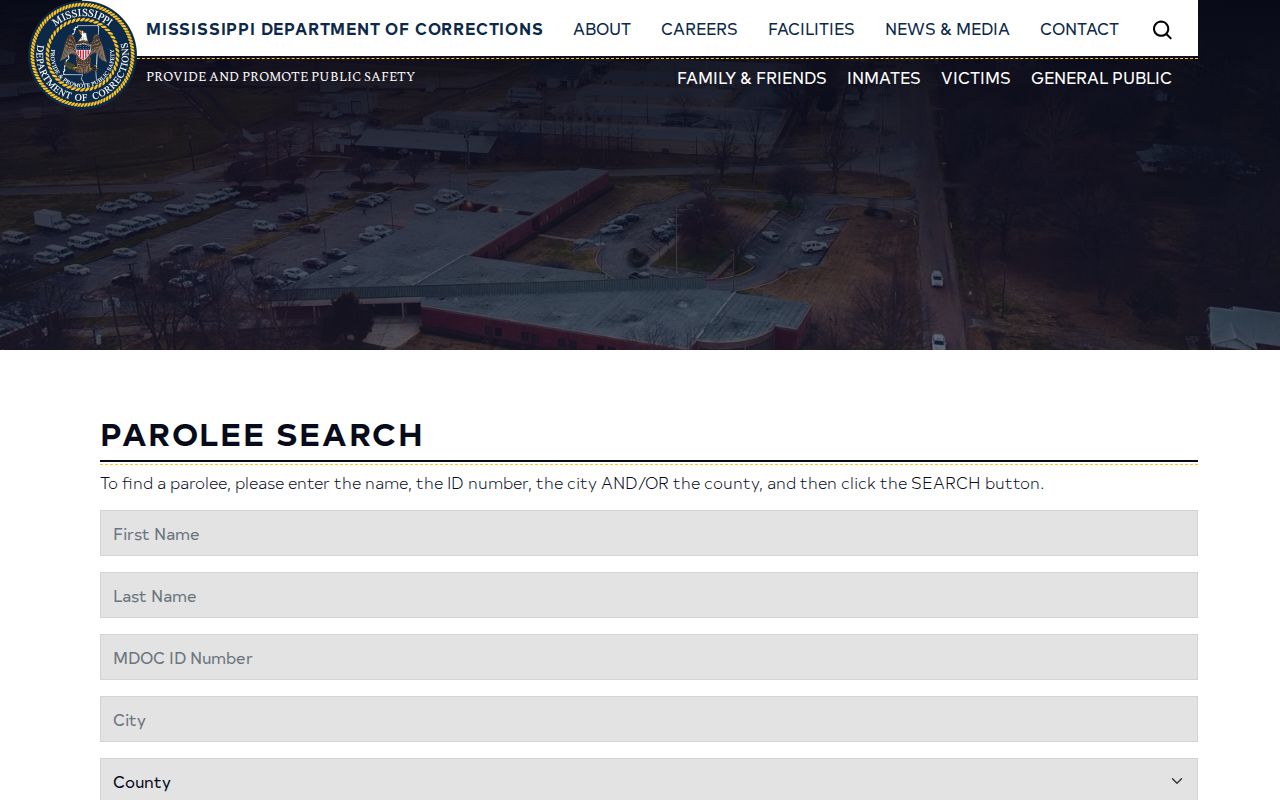
The form is a starting point, not proof that every type of community supervision is searchable.
Note: A county jail roster shows current confinement, not whether a released person is complying with state community supervision.
Hancock Parole Office After Release
Hancock County has a direct MDOC Community Corrections channel in Waveland. The office can route questions about public supervision status and the proper reporting location. Individual case notes may be confidential, so ask for nonexempt facts such as active status, reporting-office identity, and public dates rather than an officer's narrative.
The official office information was verified July 26, 2026. Personnel, hours, and routing practices can change. Confirm current instructions on the Hancock Probation & Parole Office page before a visit.
Hancock Probation & Parole Office308 Highway 90, Suite D
Waveland, MS 39576
Phone: 228-467-2312
Fax: 228-467-0657
The official MDOC office screen identifies the local Hancock supervision channel.
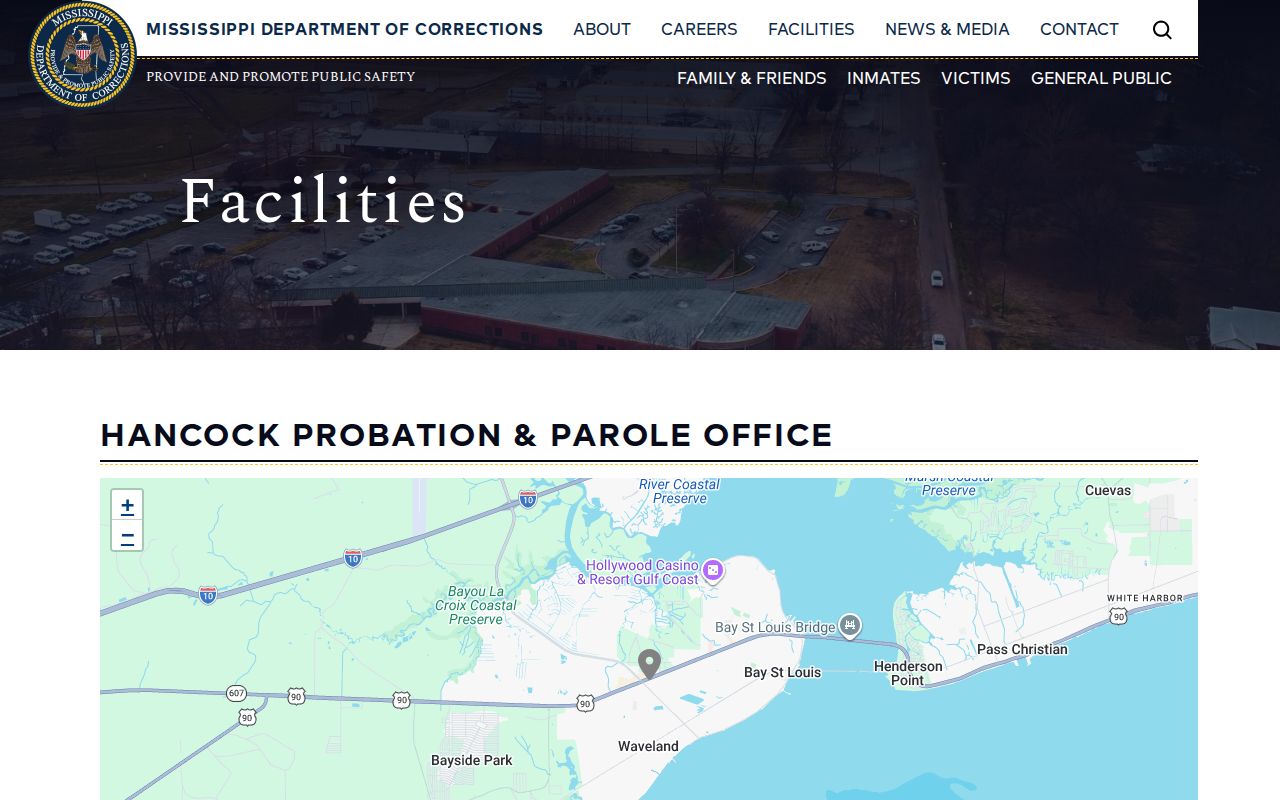
This local office is more useful for reporting-office questions than a general statewide directory.
Hancock Parole First-Report Rule
Mississippi State Parole Board rules give Hancock's local office special practical value after release. A parolee should first report to the field officer within 24 hours of actual release unless directed otherwise. The trigger is actual release, not a Tentative Release Date shown earlier in an MDOC record. A date estimate may move, while the first-report instruction follows the real custody event.
Check the current rule through the Secretary of State Administrative Code gateway, then navigate to Mississippi State Parole Board, Title 29, Part 201. Other conditions, fees, interstate transfer steps, and reporting methods should come from the officer. Do not copy a standard condition from another case.
The official Administrative Code gateway is the durable route to the Board's current rules.
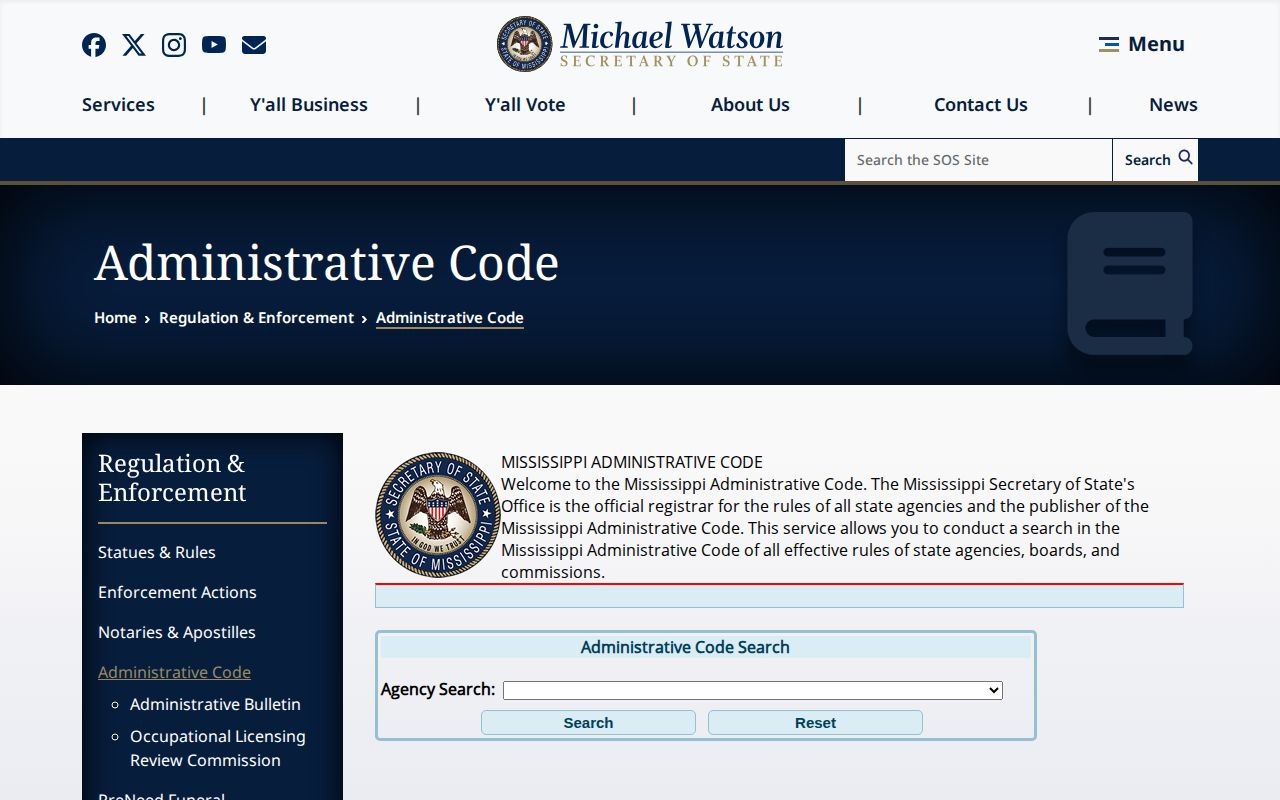
The rule source helps separate a required post-release report from a projected release event.
Note: Confirm a changed reporting direction with the assigned office because the individual instruction controls the first contact.
Hancock Supervision Warrants and Violations
No official statewide public MDOC absconder or supervision-warrant database was found. A person missing from the parolee search must not be labeled an absconder, discharged, or free of a warrant. Verify supervision through MDOC. Verify a public warrant through the court or the appropriate law-enforcement channel. VINELink can give custody-event notice for a specific person, but it does not certify community-supervision compliance.
A violation is an alleged breach of a supervision condition. Revocation is the formal process that can return a person to custody or change supervision. The Board handles parole revocation authority, while the sentencing court controls probation orders and revocation. Conditions differ by person. Common labels should never replace the written order.
MDOC's records policy treats field-officer records as an exempt category. A narrow request for public status and dates is more likely to match the record sought than a request for all notes. If current custody becomes the question, follow the agency-specific path on the Hancock County released inmate search.
Hancock Parole Board Records
The Mississippi State Parole Board and MDOC perform separate work. The Board grants, denies, and revokes parole. MDOC calculates eligibility, keeps the correctional record, and supervises the person after release. A tentative date in an MDOC result is therefore not a Board decision. Likewise, a parole grant does not by itself show the exact time when the institution completed the release transaction.
No current public person-by-person hearing calendar or searchable decision-results database was found on the official state sites. Board rules say hearings are closed. Staff sets the appointment, and review may occur through the file, in person, by telephone, or by teleconference. The rules provide for written notice to the person after deliberation. A denial action sheet may state reasons and set a later hearing. Do not invent a public result from a date or from silence online.
The Board publishes 239 North Lamar Street, Suite 501, Jackson, MS 39202, phone 601-576-3520, and MSStateParoleBoard@mdoc.state.ms.us. Ask what official action is publicly available. The Mississippi Parole Board directory provides the agency contact screen, while inmate-record requests route through MDOC.
Hancock Probation Court Orders
Probation begins with the sentencing court, so the docket is the durable source for its legal terms. A sheriff misdemeanor or felony preliminary matter starts in Hancock Justice Court. A Bay St. Louis or Waveland municipal prosecution begins in the named municipal court. A felony indictment and circuit judgment route through the Hancock Circuit Clerk. Ask for the probation order, later modification, revocation filing, and final satisfaction or discharge entry that is legally public.
The court record and MDOC supervision record answer different questions. The order states what the judge imposed. Community Corrections can identify the public supervision status and reporting office. A docket event does not establish that every administrative step occurred on the same day, and an MDOC search result does not replace the court's sentence.
When the person bonded out before an initial appearance or appointment of counsel, Hancock's Circuit Clerk describes a petition process. Early circuit data can therefore be sparse. That local gap does not prove the case ended. Follow the correct court trail and use the case number whenever possible.
Hancock Supervision Discharge Records
Supervision can end through expiration of the term, a lawful discharge, or a later court or Board action. The public parolee search was not verified to preserve every former record. A missing result alone cannot establish that the term ended. Ask MDOC Records for the available nonexempt status, final date, and authority, or obtain the court's discharge order in a probation case.
The Mississippi Public Records Act permits access to nonexempt public records, while another law may protect parts of the file. MDOC uses its GovQA portal for written public-record requests and says telephone requests are not accepted. Its published policy calls for a written response within seven working days and generally describes production within fourteen working days after request or payment unless more time is needed. Ask for an itemized estimate.
MDOC Records also publishes P.O. Box 24388, Jackson, MS 39225, phone 601-933-2889, and MDOCRecordsDepartment@mdoc.state.ms.us for records questions. A status question is not the same as a request to inspect or copy a record. Use the agency's GovQA request portal when the document itself is needed.